

How Long Should You Stay in a Cold Plunge? A Beginner’s Guide

If you’re new to cold water immersion, one question comes up more than any other: how long to stay in a cold plunge to actually get the benefits without overdoing it. The answer is shorter than most people think — and it depends on your experience, the water temperature, and what you’re hoping to gain. At ROK SPAS in Denver, we guide first-timers and seasoned plungers through the same proven approach every week, so you can step in, breathe through it, and step out feeling sharper than when you arrived.
This guide walks you through recommended durations, the science behind the timing, and the practical tips that make a cold plunge feel less like a dare and more like a wellness ritual.
How Long to Stay in a Cold Plunge: The Short Answer
For most people, the sweet spot is 2 to 5 minutes in water between 39°F and 55°F. That’s enough time to trigger the physiological responses cold immersion is known for — a spike in norepinephrine, improved circulation, and a reset of the nervous system — without crossing into territory that taxes your body unnecessarily.
If you’re brand new, start with 30 seconds to 1 minute and build from there. If you’ve been plunging for months, you might comfortably reach 3 to 5 minutes. Beyond about 10 minutes, the additional benefit drops off sharply and the risk of overcooling rises. More is not better. Consistency beats heroics every time.
Cold Plunge Duration by Experience Level
Your tolerance for cold builds quickly with regular practice. Here’s a realistic progression most members at our Denver spa follow.
First-Timers: 30 seconds to 1 minute
Your first plunge is mostly a nervous system event. The cold hits, your breath shortens, and your instinct is to brace. The goal isn’t to grit it out — it’s to learn how to control your breathing while submerged. Aim for one slow exhale through pursed lips, then another. Climb out before you start shivering uncontrollably.
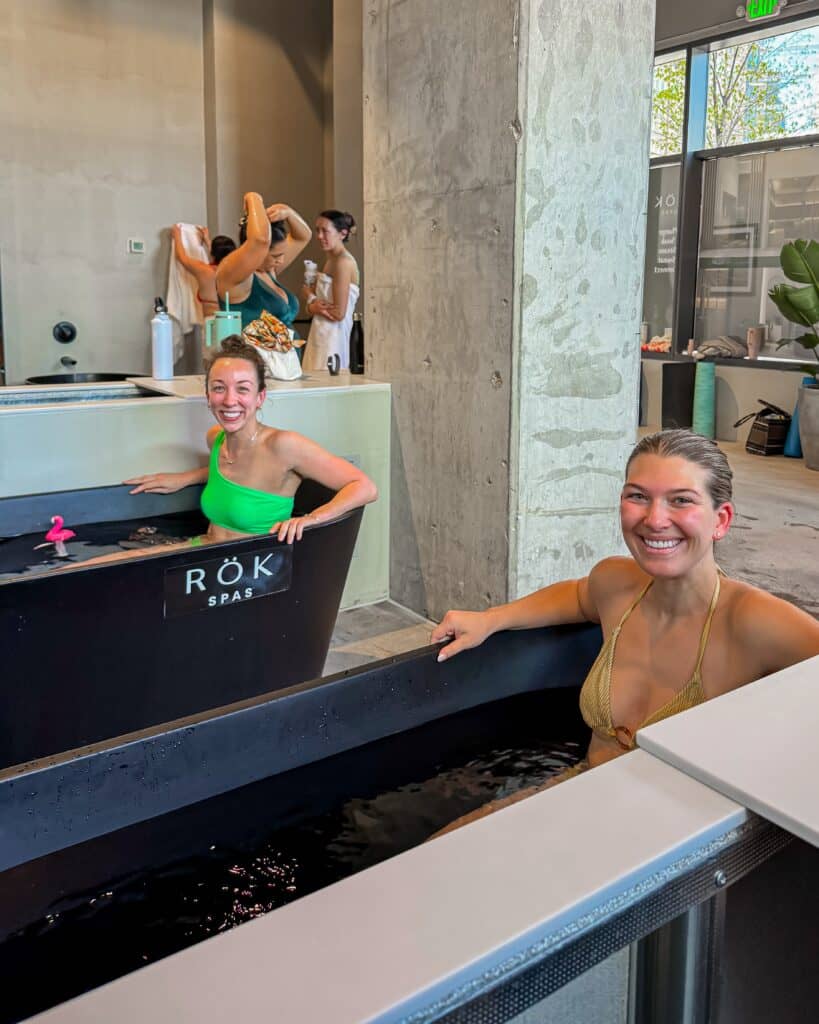
Intermediate: 1 to 3 minutes
After a week or two of consistent practice, you’ll find that the initial cold-shock response softens. Your breathing stays steady from the moment you enter. This is the range where most members at ROK SPAS settle in — long enough to feel a clear post-plunge buzz, short enough to repeat in the same session if you’re cycling between the cold plunge and the sauna.
Advanced: 3 to 5+ minutes
Once you’ve built a regular practice, 3 to 5 minutes feels manageable, even meditative. Some experienced cold plungers go a little longer, but there’s no extra credit for time alone. The quality of the session — calm breath, steady mind, an unrushed exit — matters more than the clock.
What Determines Your Ideal Cold Plunge Time?
A few variables decide how long any one session should last for you specifically. Knowing them helps you tune your routine instead of guessing.
Water Temperature
Colder water means shorter sessions. At 50–55°F, 5 minutes is well within range for most healthy adults. At 39–45°F, even experienced plungers usually cap sessions at 2 to 3 minutes. Our cold plunge at ROK SPAS is held in the optimal therapeutic range, so you don’t have to second-guess the dial.
Your Goals
Are you plunging for nervous system reset, mood and focus, muscle recovery after a long Colorado trail run, or general resilience training? Shorter, more frequent exposures tend to work best for mood and focus. Slightly longer sessions, often paired with a Nordic sauna for contrast therapy, are common when recovery is the priority.

Tolerance and Health
Cold immersion is a stressor. That’s the point — small, controlled stress trains your body to handle bigger stress better. But it’s still a stressor, so adjust for your sleep, hydration, and overall load that day. If you’re sick, severely sleep-deprived, or managing certain cardiovascular or blood pressure conditions, talk to your doctor before adding a plunge.
Tips for a Safe and Effective Cold Plunge
A few habits separate a great plunge from a rough one.
Breathe first, then enter. Take 3 to 5 slow nasal breaths before you step in. This tells your nervous system you’re choosing this, not reacting to it.
Submerge to your shoulders. Most of the meaningful surface area is between your collarbone and your hips. Keep your hands in if you can — they’re the hardest part for beginners, and they adapt quickly.
Stay still. Movement breaks the thin warmed layer of water against your skin and makes the cold feel more intense. Find a comfortable position and hold it.
Exit on your own terms. Don’t bolt. Stand up calmly, towel off, and let your body warm itself back up naturally — that slow rewarming is part of where the adaptation happens.
Don’t rush into a hot shower. Especially if you’ve been cycling with the sauna, give your body 5 to 10 minutes to find its own temperature again. In Denver’s dry climate, drink water before and after — altitude and low humidity can dehydrate you faster than you’d expect.
Cold Plunge Frequency: How Often Should You Go?
Duration is only half the equation. Most people see meaningful benefits with 2 to 4 cold plunge sessions per week, often paired with a sauna for contrast therapy. Daily is fine for many — just listen to your body and back off if you notice flat energy, poor sleep, or lingering chill the next day.
Experience Cold Plunge Therapy at ROK SPAS in Denver
The hardest part of starting a cold plunge practice is figuring out where to plunge consistently. At ROK SPAS — voted Best of Mindbody 2025 — we’ve built Colorado’s largest custom-designed Nordic sauna alongside a temperature-controlled cold plunge, so you can move between hot and cold the way the practice was designed to be experienced. Our team is on the floor to coach first-timers through their first 30 seconds and to help seasoned plungers refine their routine.
If you’ve been curious about cold plunging but weren’t sure how long to stay in a cold plunge — or how to build a practice that sticks — come try it in a setting built for it. Book a session or explore membership options and step into Denver’s premier Nordic spa experience.