
Nordic Sauna vs Infrared Sauna: Which Is Right for Your Wellness Routine?

If you’ve been exploring saunas as part of a recovery or wellness routine, you’ve almost certainly run into the question: Nordic sauna vs infrared sauna — which one actually delivers the benefits you’re after? Both have devoted followings, both promise relaxation and recovery, and both can play a meaningful role in how you take care of your body. But they work in fundamentally different ways, produce different sensations, and tend to suit different goals. At ROK SPAS in Denver, Colorado, we built our wellness experience around the traditional Nordic approach for reasons we’ll unpack below — but the right answer depends on what you want from your time in the heat.
This guide breaks down how each sauna heats your body, the science-backed benefits of each, what the experience actually feels like, and how to choose between them. By the end, you’ll know which sauna belongs in your routine — and why so many Denver-area athletes, professionals, and wellness seekers are returning to the time-tested Nordic tradition.
What Is a Nordic Sauna?
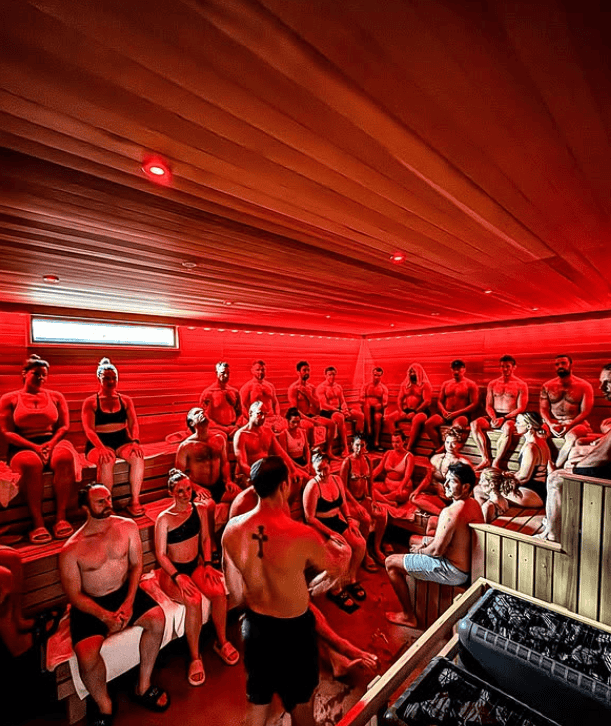
A Nordic sauna — sometimes called a traditional or Finnish sauna — uses a heater to warm a stack of stones, which in turn heats the surrounding air to deliver an authentic dry-heat experience. Temperatures typically range from 160°F to 200°F, and the heat that radiates from the stones envelops you the moment you step inside. That deep, dry warmth is the defining feel of the Nordic tradition.
Nordic saunas have been part of Scandinavian and Finnish life for more than two thousand years. They aren’t a wellness trend — they’re a cultural ritual, designed for full-body sweating, social connection, and recovery. The intense ambient heat warms you from the outside in, drawing out tension and easing tight muscles in a way no other modality quite matches.
At ROK SPAS, our Nordic Sauna is the largest custom-designed sauna in Colorado, built specifically to replicate this authentic heat profile. You can learn more about how we engineered the space on our Nordic Sauna at ROK SPAS page.
What Is an Infrared Sauna?
An infrared sauna takes a completely different approach. Instead of heating the air around you, it uses infrared panels to emit light waves that warm your body directly. Air temperatures stay much lower — usually 110°F to 140°F — but your core temperature still rises because the infrared energy penetrates skin and tissue.
Because the air is cooler, an infrared session feels less intense than a Nordic sauna. There’s no rush of humid air, no enveloping ambient heat. Some people prefer this gentler profile, especially if high heat feels overwhelming or if they’re easing into sauna use for the first time.
Infrared technology is relatively new compared to traditional saunas, and most of the long-term cultural and research base is built around the Nordic style — but infrared has a growing body of evidence around cardiovascular and recovery benefits as well.
Nordic Sauna vs Infrared Sauna: The Key Differences
When weighing Nordic sauna vs infrared sauna, three differences matter most:
Heat experience
Nordic saunas deliver a powerful, enveloping dry heat that radiates from the stones and surrounds you on all sides. Infrared saunas produce a milder ambient warmth with deeper tissue penetration. If you want the sensation of “real” heat — the kind that demands you breathe deeply and surrender — Nordic wins. If you want a low-key, sweat-without-the-burn experience, infrared has the edge.
Sweat profile
Both make you sweat, but the mechanism differs. Nordic sauna sweat is driven by the air temperature; you’ll sweat profusely within minutes. Infrared sweat builds more gradually as your core warms from within. Many users describe Nordic sweat as more cathartic, while infrared sweat feels lighter and more sustained.
Social and ritual experience
A Nordic sauna is built for shared experience. The high benches, wood-lined walls, and unhurried pace invite conversation, silence, and contrast cycles with cold. Infrared cabins are typically smaller, often single-person, and built around solitary use. If community and tradition are part of what you want from a sauna, Nordic delivers it.
Health Benefits Backed by Research
Both sauna styles support wellness in meaningful ways. Research has linked regular sauna use — most of it studied in the Nordic tradition — to improved cardiovascular health, reduced inflammation, better sleep, and lower stress markers. Studies from Finland have shown that frequent sauna bathers see reductions in cardiovascular events and all-cause mortality risk.
Infrared sauna research is newer but promising, particularly around muscle recovery, joint pain, and skin health. The evidence base is smaller, and most clinical studies on heat therapy still center on traditional saunas.
For Denver residents living at altitude and balancing demanding lifestyles, either style can support recovery. But if your goal is the deepest, most well-studied set of benefits — and the ability to pair heat with cold for true contrast therapy — the Nordic approach has the longer track record.
Which Sauna Is Right for You?
Choose a Nordic sauna if you want a high-heat, immersive experience grounded in centuries of tradition. The ability to do real contrast therapy with a cold plunge afterward. A social or ritual setting rather than a solo cabin. The strongest research base behind the wellness claims.
Choose an infrared sauna if you want a gentler heat that’s easier to tolerate for longer sessions, a solo and quiet environment, and a specific focus on light-based therapy.
For most people building a serious recovery routine in Denver — runners, lifters, skiers, busy professionals — the Nordic sauna is the better foundation. It pairs naturally with cold exposure, supports a wider range of wellness goals, and delivers a more memorable experience that keeps you coming back.

The ROK SPAS Approach in Denver, Colorado
We chose to build ROK SPAS around Nordic principles because we wanted to bring an authentic, ritual-driven wellness experience to Denver. Our Nordic Sauna isn’t an afterthought — it’s the centerpiece of a full Nordic spa journey that includes a steam room, thermal soaks, and a cold plunge. The combination is what makes contrast therapy work, and it’s what earned us Best of Mindbody 2025.
Whether you’re recovering from a long run through Wash Park, managing the stress of a Colorado workweek, or simply looking for a wellness practice that lasts, the Nordic sauna deserves a place in your routine.
Ready to Experience the Difference?
The best way to settle the Nordic sauna vs infrared sauna question is to feel one for yourself. Book a session or explore membership options at ROK SPAS in Denver, and discover why the traditional Nordic approach has stood the test of time.